Multi-Million Dollar Theft from US Government Custody: What the Largest Custody Scandal Means for Bitcoin Investors
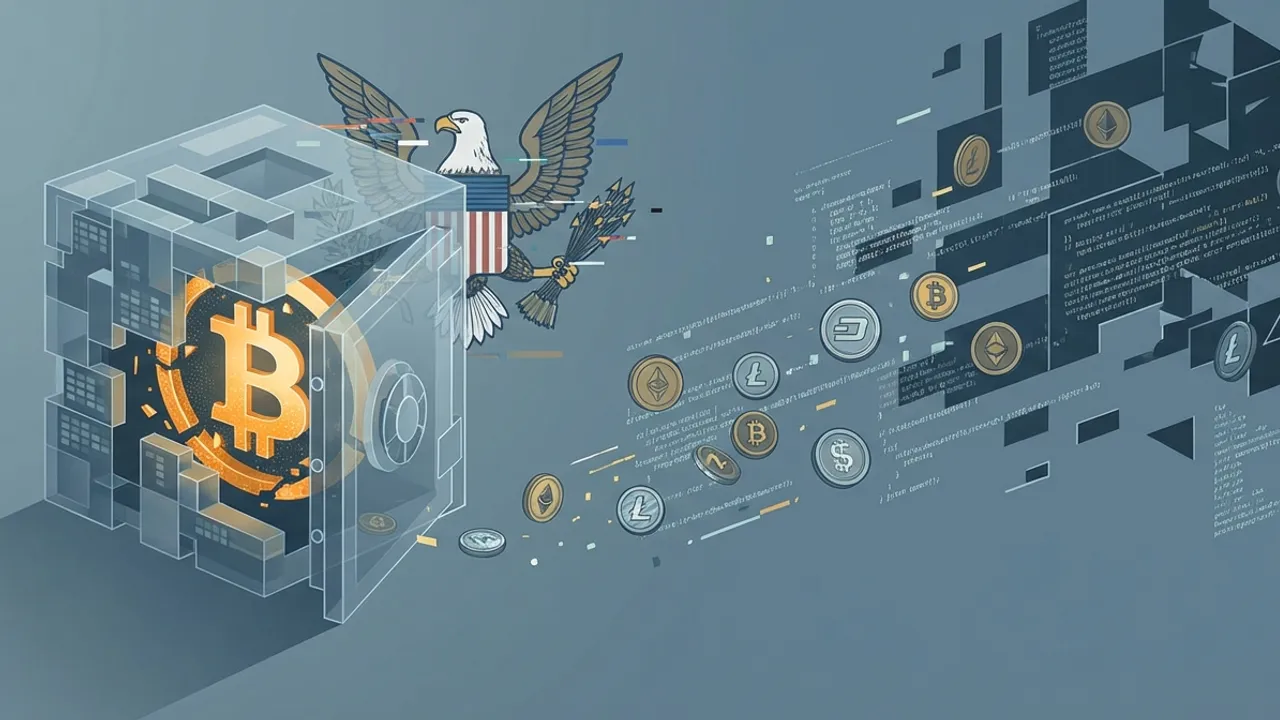
Over $40 million in cryptocurrencies were stolen from US government custody – allegedly by the son of a government contractor. The case reveals fundamental vulnerabilities in custody solutions and underscores the importance of self-custody for Bitcoin investors.
Government Failure in Custody: A Wake-Up Call for the Entire Industry
If even the US government cannot securely store its seized crypto holdings, what are the implications for retail investors, institutional investors, and the entire Bitcoin infrastructure? The recently uncovered multi-million dollar theft from government wallets is more than just a criminal case – it is a fundamental stress test for trust in centralized custody solutions and a clear signal of the need for robust security concepts.
The case demonstrates that the greatest vulnerability in storing digital assets is not the technology itself, but rather the human factor and organizational failures in access control.
The Facts
On-chain investigator ZachXBT has published extensive research on a spectacular theft case in which over $40 million – primarily in Ethereum – was stolen from wallets connected to US government seizures [1]. The trail leads to a cybercriminal with the alias "John Lick," who allegedly boasted about his substantial wallet holdings in hacker circles.
The perpetrator's conviction came not through traditional investigative work, but through his own self-presentation in Telegram group chats. In recorded video sessions, the suspect demonstrated his wallet holdings to other cybercriminals and authorized transactions live – a ritual known in the underground as "band for band" [1]. Through these recordings, ZachXBT was able to definitively prove that the actor had control over multiple wallets containing tens of millions of dollars.
The case becomes particularly explosive due to the alleged perpetrator's identity: According to ZachXBT's research, it is John Daghita, a man in his mid-twenties whose father Dean Daghita is CEO of Command Services & Support Inc. (CMDSS) – an IT service provider with active government contracts [1]. The company has contracts with US agencies that explicitly include support for managing and liquidating seized crypto assets.
The stolen funds came from wallets that can be linked on-chain to known government custody addresses, including addresses associated with the Bitfinex hack and other major cases [1]. As early as March 2024, approximately $24.9 million flowed out of one such address, with additional inflows following in the fourth quarter of 2025. In total, the identified inflows amount to over $60 million [1].
David Bailey, CEO of Bitcoin Inc., commented on the case with clear words: "The Treasury needs to secure the private keys from the Justice Department as quickly as possible before more Bitcoin is stolen" [1]. Following publication of the research, the accused changed his public presence: usernames were removed, screen names changed, and wallet holdings no longer publicly displayed [1].
Parallel to this scandal, a market overview of hardware wallets shows the available solutions for self-custody [2]. The range extends from the Ledger Nano X with Bluetooth functionality and support for over 5,500 cryptocurrencies, to the open-source-focused Trezor Safe 5 with EAL6+-certified Secure Element, to the highly secure Coldcard Mk4 with air-gap design for Bitcoin maximalists [2]. The NGRAVE ZERO even offers EAL7 certification – the highest level in the consumer sector – and communicates exclusively via QR code [2].
Analysis & Assessment
This case reveals a fundamental irony: While Bitcoin was designed as a decentralized, trust-minimized system, even a superpower fails at the basic task of secure custody. The problem does not lie in the technology – the blockchain itself functioned flawlessly and made the theft transparently traceable. The problem lies in the organizational implementation and the fact that access rights were apparently not sufficiently controlled.
For Bitcoin investors, several key insights emerge: First, the case impressively demonstrates the counterparty risk of centralized custody. If government agencies with supposedly high security standards exhibit such failures, questions arise about the trustworthiness of commercial custody providers. Second, the incident underscores the importance of multi-signature solutions and organizational separation of access rights – concepts that have been advocated in the Bitcoin community for years.
Historically speaking, this incident joins a long list of custody failures, from Mt. Gox to QuadrigaCX to FTX. The crucial difference: this time it affected not a private exchange, but government custody. The signal to the market is clear: trust in central institutions – whether private or governmental – carries inherent risks.
The medium-term implications could be significant. Institutional investors who invest in Bitcoin through regulated custody solutions will need to intensify their due diligence processes. At the same time, the case is likely to fuel demand for hardware wallets and self-custody solutions. The products presented in the second article – from user-friendly solutions like the Trezor Safe 5 to highly secure specialized devices like the Coldcard Mk4 – will gain relevance.
For the regulatory discussion around government Bitcoin reserves, as increasingly conducted in the US, the case is particularly explosive. How can a Strategic Bitcoin Reserve be credibly managed when the management of seized assets already fails? The answer likely lies in transparent multi-signature architectures with clear separation of responsibilities – principles that the Bitcoin community has long established.
Conclusion
• The multi-million dollar theft from US government holdings demonstrates that even government actors can fundamentally fail in the custody of digital assets – counterparty risk in centralized custody remains significant even with supposedly trustworthy institutions
• The transparent traceability of the theft on the blockchain shows: Bitcoin makes organizational failures visible, but cannot prevent them – the solution lies in robust multi-signature architectures and strict separation of access rights
• For private investors, the case underscores the importance of self-custody: hardware wallets with certified Secure Elements today offer a level of security that apparently even government custody solutions do not achieve
• Institutional investors must intensify their due diligence processes with custody providers and should insist on transparent, auditable multi-signature solutions with clear organizational separation
• The debate about government Bitcoin reserves takes on a new dimension through this incident: credible management requires transparent structures and the adoption of proven best practices from the Bitcoin community
Sources
AI-Assisted Content
This article was created with AI assistance. All facts are sourced from verified news outlets.