Privacy Tools Emerge as Lifeline for Iranian Protesters and Developer Begins Prison Sentence
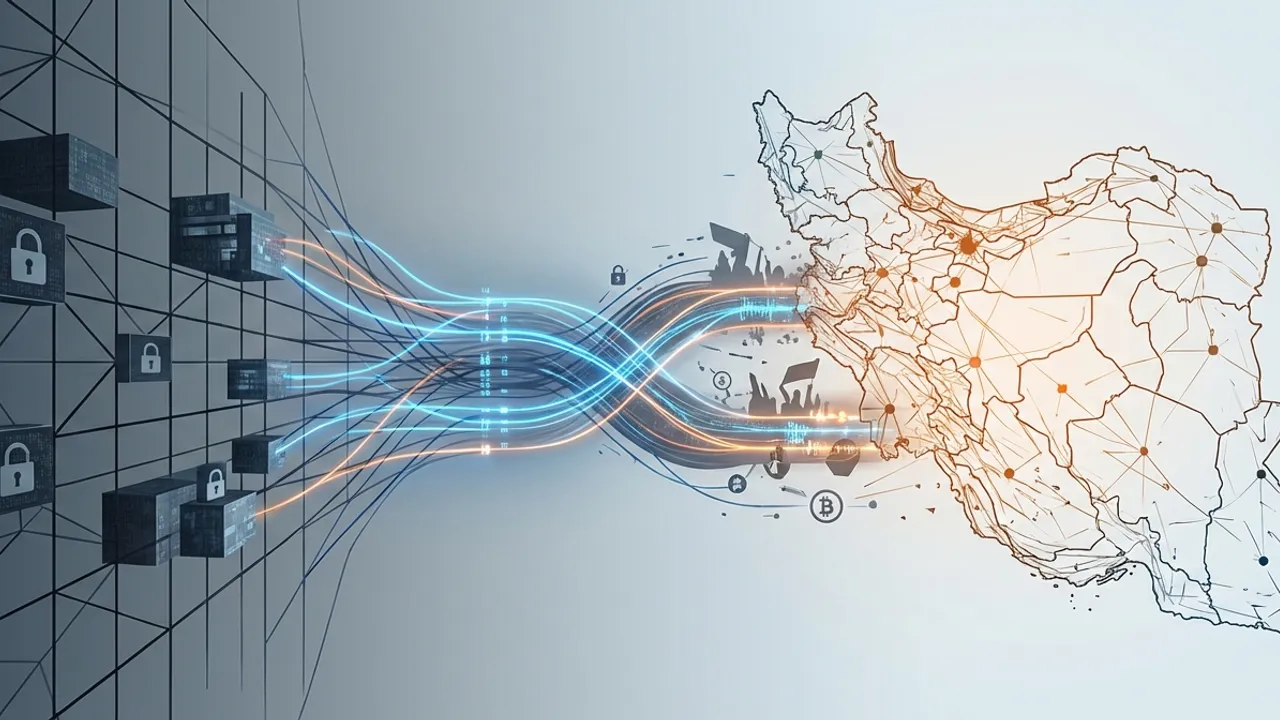
As Iranian demonstrators face government blackouts, Bitcoin-derived communication apps enable offline coordination, while Samourai Wallet co-founder begins five-year federal sentence for privacy tool development.
Two parallel stories illustrate the high stakes surrounding privacy technology and internet freedom: Iranian protesters deploying offline communication tools to circumvent government censorship, and a Bitcoin developer entering federal prison for creating financial privacy software.
Bitcoin-Derived Apps Break Iranian Internet Blackout
During recent intense protests against the Islamic Republic regime, Iranian authorities implemented a nationwide telecommunications blackout and jammed satellite services including Starlink to prevent demonstrator coordination [2]. In response, protesters have turned to freedom technology tools—Bitchat, Noghteha, and Delta Chat—for offline communication [2].
Two of these applications originate directly from the Bitcoin community [2]. Bitchat, created by Bitcoin pioneers Jack Dorsey and open-source developer Calle, operates over Bluetooth mesh networks and the Nostr protocol without requiring internet connectivity [2]. Dorsey first announced the project on July 6, 2025, describing it as a weekend exploration of Bluetooth mesh networks [2].
Noghteha represents a closed-source fork of Bitchat adapted specifically for Iranian needs, featuring full Persian/Farsi language support, an enhanced user interface, and locally-tailored features [2]. Digital-political activist Nariman Gharib developed the application independently without government or private funding as a response to regime tactics [2].
Rapid Adoption Under Pressure
Google Play recorded over 70,000 Noghteha downloads within three days during the first week of January 2026, before the complete internet shutdown [2]. Actual usage likely exceeds these figures due to peer-to-peer sharing, sideloading, and Bluetooth transfers following the blackout [2].
Promotion reached broad audiences through Iran International, an opposition satellite television channel broadcasting from outside Iran [2]. The station serves as a major information source and coordination platform for opposition figures including leader Reza Pahlavi [2].
Bitchat had previously demonstrated effectiveness during Nepalese protests amid social media restrictions, recording nearly 50,000 downloads in a single day [2].
Security Tensions and Tactical Choices
The decision to release Noghteha as closed-source rather than fully open has generated controversy. Bitcoin researcher and former political prisoner Ziya Sadr explained the regime's sophisticated information warfare approach: "The regime sets up phishing attacks, creates fake download links, and uses influencers on social media to misguide people into installing malicious versions of the same app" [2].
This threat environment likely motivated the closed-source strategy and timing of Noghteha's release just before the anticipated blackout, allowing distribution before regime interference [2]. The application remains compliant with Bitchat's MIT license, which permits modifications and redistribution with proper attribution [2].
Bitchat co-creator Calle has expressed concerns about the closed-source elements, donation requests, and security risks in adversarial settings [2]. An editor's note accompanying coverage explicitly warned that Calle has advised against using Noghteha due to inability to verify its code or security, though ground reports indicate widespread successful use by protesters [2].
Samourai Developer Enters Federal Prison
Meanwhile, Keonne Rodriguez, co-founder of Samourai Wallet, surrendered himself on December 19 to Federal Prison Camp Morgantown in West Virginia to begin a 60-month sentence [1]. Rodriguez detailed his arrival experience in a letter describing the fundamentally unnatural act of voluntarily surrendering liberty [1].
He arrived in intake uniform that identified him as a newcomer and faced complications accessing funds due to surrendering on a Friday before Christmas [1]. Rodriguez credited these difficulties to Judge Cote, who sentenced him [1].
Despite the circumstances, Rodriguez described encountering unexpected kindness from fellow inmates who provided food, clothing, and guidance without expectation of repayment [1]. Multiple prisoners, including former physicians and scientists, offered assistance as acts of generosity reflecting their own early experiences [1].
Rodriguez was housed in the Bates Unit B Wing, designated for newcomers and younger inmates [1]. He described the environment as manageable though uncomfortable, with respectful inmates and professional corrections staff [1].
These parallel narratives underscore how privacy technology continues serving vital functions in oppressive environments while developers face legal consequences for creating such tools in democratic jurisdictions.
Sources
AI-Assisted Content
This article was created with AI assistance. All facts are sourced from verified news outlets.